Image

share:


Bringing home a new puppy is an exciting milestone—especially for first-time pet parents. One of the most important responsibilities you’ll take on is making sure your pup gets the right nutrition from the very beginning. As you navigate puppyhood, you’ve probably wondered: “What should I feed my puppy, and how many times should a puppy eat?”
With so many food options available today, choosing the right meals and feeding routine can feel overwhelming. Whether you're looking for the best food for a one-month-old puppy or simply want expert guidance on puppy feeding, this guide will walk you through everything you need to know to support your pup's healthy growth.
A puppy’s first few months are one of the most crucial stages of their life. During this time, they need complete and balanced nutrition to build strong bones, healthy muscles, and a well-developed immune system. Every week matters, and the food choices you make now play a big role in shaping your puppy’s long-term health and development.
In their first few weeks of life until they are a month old, a puppy’s primary source of nutrition is mother’s milk. Mother’s milk provides essential antibodies, nutrients, and energy that support immunity, growth, and overall development. During this stage, puppies are entirely dependent on milk for survival and proper development.
If mother’s milk is unavailable, puppy milk replacers can be used as a safe alternative. These formulas are designed to mimic a mother dog’s milk and provide the right balance of nutrients. Avoid giving regular cow’s milk, as it can upset a puppy’s delicate digestive system.
When a puppy is orphaned or its mother is unable to nurse, bottle feeding becomes essential. Here’s how to bottle feed them safely and effectively, ensuring your little one receives the nutrition it needs.
A typical schedule involves eating four to five meals a day but make sure to monitor your puppy’s weight and behavior to know if adjustments are needed. If you’re ever unsure about how many times should a puppy eat, consult your veterinarian.
By around 1 month old, a puppy’s milk teeth begin to appear, signaling that they are ready to transition from mother’s milk to solid puppy food. This gradual transition is important to allow their digestive system to adjust. Start with soft, moistened puppy food or gruel made from high-quality puppy kibble mixed with water or milk replacer.
As puppies begin eating solid food, their meals should provide a balanced mix of nutrients to support healthy development:
Wondering what the best food for a one-month-old or two-month-old puppy is? Here’s a brief puppy feeding guide to give you an idea of what to feed and how many times to feed your pup!
When a puppy is this young, ideally its mother should feed it. So, if the mother of your pup is around, you do not need to worry about its meals. However, if the puppy’s mother is not around, there are substitutes for its food. Puppies so young are usually fed milk with the help of a dropper or a sipper bottle. Consult your vet to know the right amount of milk your puppy needs every day.
A 6–12-week-old puppy must be fed food specially formulated to meet the nutritional needs of a growing dog. Your pup must be fed 4 times a day at this age. If your pup is a large breed, feed it unmoistened dry food when it turns around 10 weeks old. If you have a small dog breed, start doing the same once it turns 12-13 weeks old.
Start feeding your puppy twice every day once it turns 6-12 weeks old. If you decide to neuter or spay your pup, its energy requirement will decrease post the procedure. After the procedure, you can switch to adult dog food! Small breed dogs can switch to adult food at 7-9 months old and bigger breed dogs at 13-14 months old.
After your puppy has turned a year old, you can feed it two-half portions. You can also consult your vet to make sure you are providing your pooch with all the nutrition it needs.
There is no one-size-fits-all puppy food guide, because every dog is unique. A small breed puppy can’t handle the same portion sizes as a large breed puppy, even if they’re the same age. And even two puppies of the same breed may require different amounts of food depending on their metabolism, activity level, medical history, and overall condition.
The best thing you can do is to monitor your pup’s consumption and make smart adjustments along the way. If your puppy regularly leaves food in the bowl, it may be a sign that you’re offering too much. On the other hand, if they finish every meal quickly and still seem hungry, their portions may need to be increased. Additionally, dog treats should also be factored into your puppy’s total daily intake.
On top of monitoring, consulting your veterinarian is also recommended. Your vet can help you determine the right portion sizes, feeding frequency, and food type based on your puppy’s age, breed, size, and individual needs.
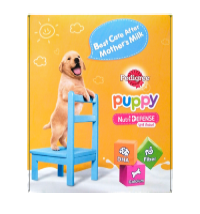
Ensure that your furry friend receives the correct nutrition with PEDIGREE at every stage of life. Take a look at our comprehensive puppy feeding chart:
Puppy Complete Nutrition | ||||
Chicken, Egg & Milk Flavor | ||||
Recommended Daily Feeding | ||||
Puppy | Toy | Small | Medium | Large |
<3 Months | 16-117g | 54-117g | 90-384g | 151-566g |
3-6 Months | 35-135g | 117-226g | 197-449g | 384-749g |
6-9 Months | 40-135g | 135-223g | 226-448g | 449-756g |
9-12 Months | Change to Pedigree® Adult Food | 135-223g | 223-439g | 448-751g |
12-18 Months | Change to Pedigree® Adult Food | 439-710g | ||
Gestation | Toy | Small | Medium | Large |
Gestation | 27-90g | 90-152g | 152-302g | 302-508g |
>4 weeks | 44-161g | 161-282g | 282-599g | 599-1066g |
Lactation | 74-302g | 302-560g | 560-1281g | 1281-2416g |
Keep these notes in mind when studying the chart above:
Navigating the world of puppy nutrition can be a bit daunting for new pet parents. Apart from knowing the best food for a puppy, there are plenty of other things you can do that can make a big difference in your growing dog's health.
Every puppy is unique, and appetite can vary with age, breed, activity level, and growth. Observing hunger signals like whining, following you around, or staring at your food helps you know when they’re ready to eat.
Check the feeding guidelines on your puppy food packaging and adjust portions based on their appetite and activity. Consulting a vet or nutritionist can provide a tailored feeding plan for your puppy’s size and growth stage.
Feeding methods:
For most puppies, scheduled, measured meals combined with observation of hunger cues to ensure proper nutrition and healthy development.
The good news is that both dry and wet puppy food are excellent choices as long as they are complete, balanced, and specially formulated for growing pups. Upon visiting any pet store, you will instantly notice a wide range of puppy food with both dry and wet food options. Each type has its own benefits, and many pet parents opt to feed a combination of both.
Once your puppy begins to wean, take some time to experiment with different textures and combinations. Most puppies quickly show you what they enjoy, making it easier to choose the option that keeps them happy and eager to eat.
Review this article:
Puppies need multiple meals throughout the day because they digest food quickly and burn energy fast. Most puppies should eat 3–4 meals per day until they are around 12 weeks old. From 3 to 6 months, you can gradually transition to 3 meals a day, and once they reach 6 months or older, most puppies can shift comfortably to 2 meals a day. Smaller toy breeds may benefit from sticking to 3–4 smaller meals longer.
Dry puppy food is a great option as long as it is complete, balanced, and formulated specifically for growing dogs. Kibble is convenient to store, easy to portion, and can help support oral health by reducing plaque buildup. Many pet parents prefer it because it’s affordable and simple to incorporate into a consistent feeding routine.
Wet puppy food is equally beneficial and is often recommended for young puppies because it’s soft, tasty, and easier to chew. It also provides added hydration and can help picky eaters or puppies with smaller appetites enjoy mealtime more. Many pet parents choose to mix wet and dry food to give their pups the best of both textures and nutritional benefits.
It’s normal for puppies to have a big appetite, but constant hunger could indicate stomach parasites. Deworming is crucial for this life stage as it helps your puppy digest food properly and helps them avoid serious complications. Puppies can receive their first deworming at 2-3 weeks old, followed by a second dose two weeks later. Continue monthly deworming until six months, then every three months or as advised by your vet. Always consult your veterinarian to choose the safest and most effective deworming solution for your puppy.
Signs that a puppy may be underfed include low energy, constant whining at the sight of food, and visible ribs or bones. If you notice these, try increasing their food slightly. When in doubt, consult your veterinarian to ensure your puppy is getting the proper nutrition for healthy growth.
Some puppies can develop allergies to ingredients like wheat, grains, chicken, beef, or soy. Signs include rashes, bumps, or redness around the ears, paws, mouth, or eyes. If you notice these symptoms, consult your veterinarian to identify the cause and adjust your puppy’s diet.